Gormley Garage Door ServicesService bulletin 2 of 3
Garage Door Hinge Replacement: step by step
A hinge rarely fails on its own.
Whitchurch-Stouffville, Ontario · Garage Doors · open 24/7
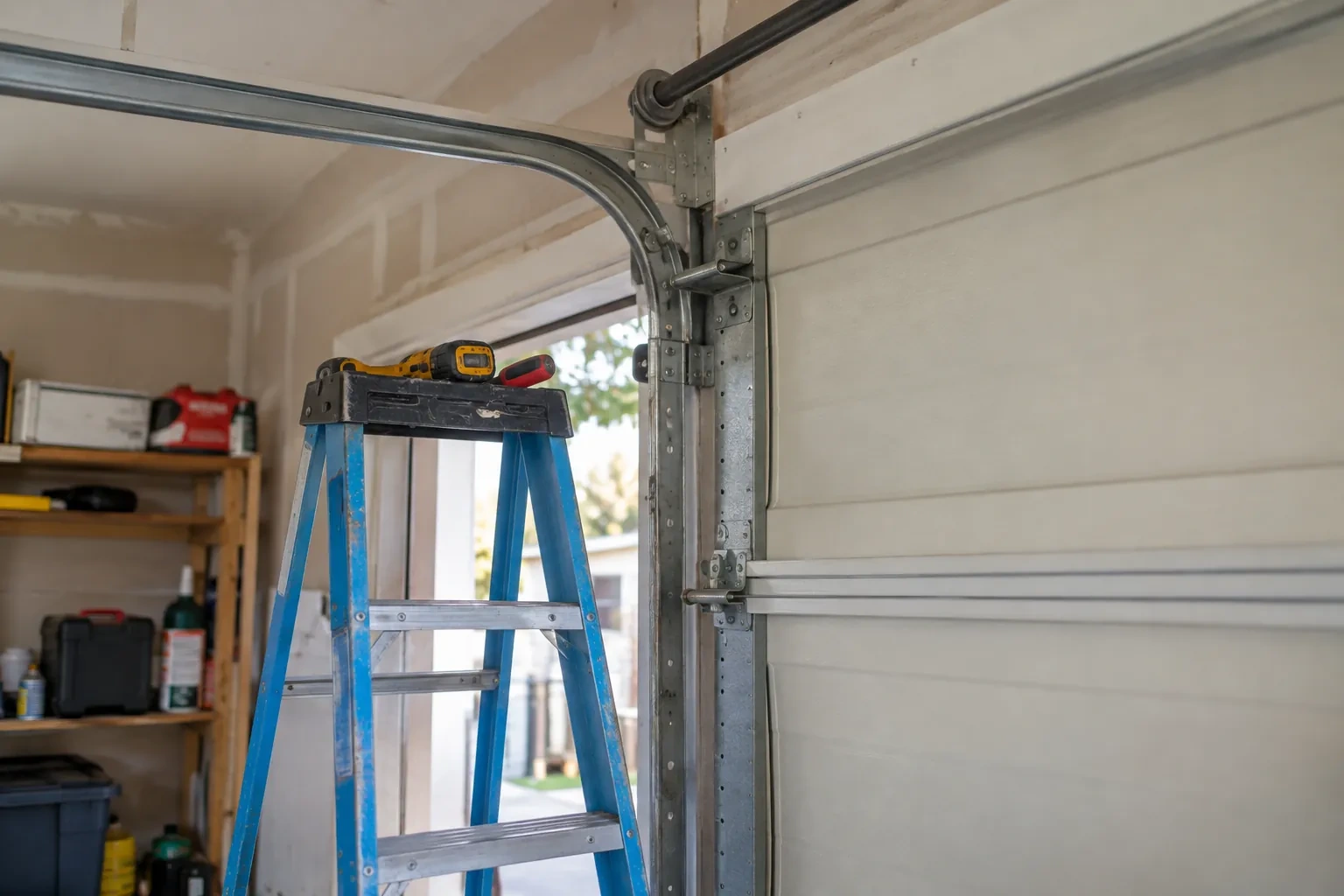
A hinge rarely fails on its own. A door that has drifted out of balance makes the opener drag it, and every hinge takes that strain on each trip. A roller whose bearing has seized twists the hinge that holds it. A track that has crept out of line makes the panels bind at the curve, and the hinge at that joint flexes until it cracks. Hinge replacement therefore begins with the whole door: rollers, track, balance and the panel edges around each hinge. The cause is corrected alongside the new hinge so the fresh part is not asked to absorb the same stress that finished the old one.
How the door meets the jambs
With the door still closed, the technician checks how it sits against the opening: does the door press evenly against the jambs on both sides, is there daylight at one edge, and do the panels line up flush with each other? Then the vertical tracks are checked for plumb, spacing from the door face and secure brackets, and the curve is examined for a smooth run. This matters because hinge numbers and track angle work together; a hinge of the wrong number, or a track that has crept, shows up here before the door moves. It also gives a baseline to compare against once the new hinges are on.
One hinge at a time, door closed
Hinges are changed singly, never a whole joint at once. With the door closed and the opener disconnected, the technician removes one worn hinge, fits its replacement and tightens it before moving to the next, so at every moment the joint is held by its other hinges and the panels stay aligned. Centre hinges go first when several are due, then the edge hinges. Each new hinge is set square to the joint line and snug to both panels before the screws are driven home, and the panels are checked for a flush face afterwards. This steady rhythm is what makes hinge work routine rather than eventful.
Learning the door's new sound
A well-hinged door has a sound, a steady rumble with no clicks, and it is worth getting to know it. A new pop or click at a fixed height points at a hinge or roller at that joint. A grinding note from one end suggests a roller bearing. A rattle when the door settles onto the floor is often a loose centre hinge screw. Because you now know what the door sounds like when everything is tight, a change stands out early, while it is a screw or a single hinge rather than a bent panel. A phone recording of the healthy door is a handy reference.