Garage Doors · Whitchurch-Stouffville
Learn about your door
This section is for reading, not selling. Learn how openers talk to remotes, why doors need balancing, and what to look at when something changes, and use what you learn however you like.
Call now · open 24/7(289) 212-6428- Service bulletin 1Garage Door Roller Replacement: what to note firstOne of the little wheels along the edge of the door has a chunk missing, another sits crooked in its hinge, and there is a fine grey dust on the floor under the track where plastic has been wearing away.Read
- Service bulletin 2Garage Door Hinge Replacement: step by stepA hinge rarely fails on its own. A door that has drifted out of balance makes the opener drag it, and every hinge takes that strain on each trip.Read
- Service bulletin 3Belt-Drive Opener Repair: what shapes the quoteA belt's life is counted in cycles and years, and on a balanced door with the rail straight and the tension right it runs for many years. What shortens it is a heavy door, an over-tight adjustment, a bent rail rubbing…Read
Ask us anything
Repair & Maintenance
Is the inspection different for an older detached garage with springs along the tracks?
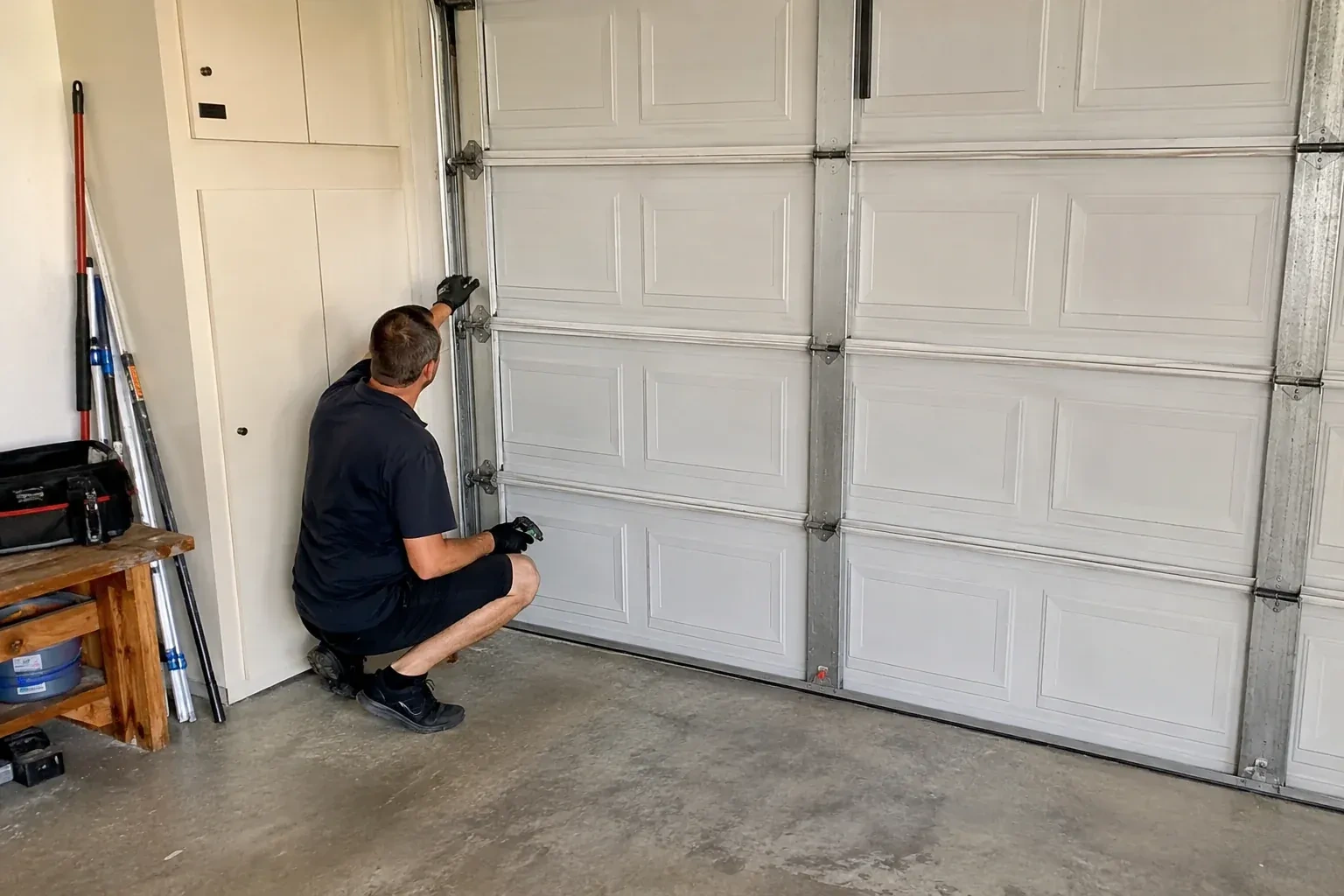
The route is the same and the counterbalance looks different. Extension springs stretch beside the horizontal tracks and pull through pulleys, so the technician examines each spring for stretch and a broken end, each pulley for a grooved wheel or a seized bearing, the cable clips, and whether a containment cable runs through the centre of each spring. Balance, reversal and photo-eye tests are unchanged. Garage Door Safety Inspection
What is the difference between a tune-up and a safety inspection?
An inspection looks and reports; a tune-up looks, reports and then does the maintenance. Both begin with an observed cycle and a check of hardware, balance, sensors and reversal. A tune-up goes on to tighten fasteners, lubricate the moving points, adjust the opener and align the photo-eyes, and it may swap a worn roller or a bottom seal on the spot. If you want the door serviced rather than assessed, the tune-up is the one to book. Garage Door Tune-Up
Will the opener need adjusting afterwards?
Sometimes, but not always. Once the door runs true by hand, the trolley is reconnected and the opener is checked against its own travel limits and force; those are only reset if that check shows they have drifted, since many openers need no force change after a repair like this. The reversal is then checked against a block laid in the door's path and by interrupting the photo eyes from a safe distance. If the opener strained hard during the event, its arm and bracket are checked too. Off-Track Garage Door Reset
What is a strut, and does a new section need one?
A strut is a horizontal steel stiffener fastened across the inside of a section to keep it from bowing. Wide doors, top sections where the opener arm pulls, and bottom sections that take knocks are the usual places for them. If your damaged section had a strut, the new one gets a straight strut refitted or replaced. If a top section bowed because it never had one, adding a strut is part of putting it right. Garage Door Panel Replacement
Springs & Hardware
Do nylon rollers need lubricating?
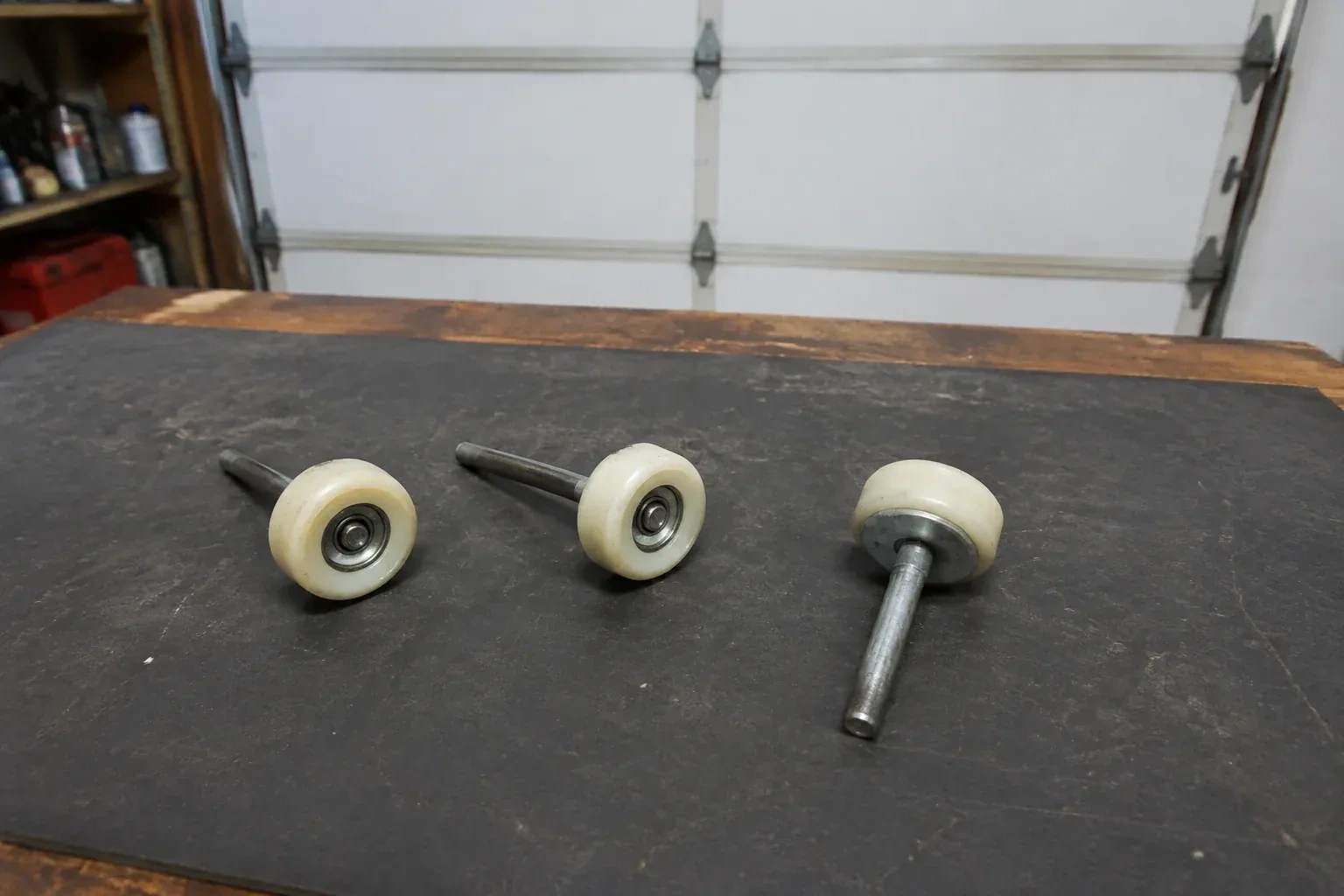
The nylon tire itself needs none; spraying it or the track only collects dust that grinds the wheel. The hinge knuckles and stems where they turn benefit from a light coat of garage door lubricant once or twice a year, worked in by running the door. The ball bearings themselves are lubricated only where the roller's own maker calls for it, since some nylon rollers should not be greased there. Rollers with sealed bearings come greased from the factory and need only a wipe and a look. Garage Door Roller Replacement
What are the hinges made of?
Stamped galvanized steel, formed into two leaves joined by a pin or a rolled tube. The zinc coating is what resists rust in a garage that sees wet cars and salt, and it is why a scratched or bent hinge starts to brown at the damaged spot. Edge hinges include a tube that holds the roller stem. Thickness is given as a gauge, most residential hinges being 14 or 18. Garage Door Hinge Replacement
The wood behind the track is rotten. Can the track still be fixed?
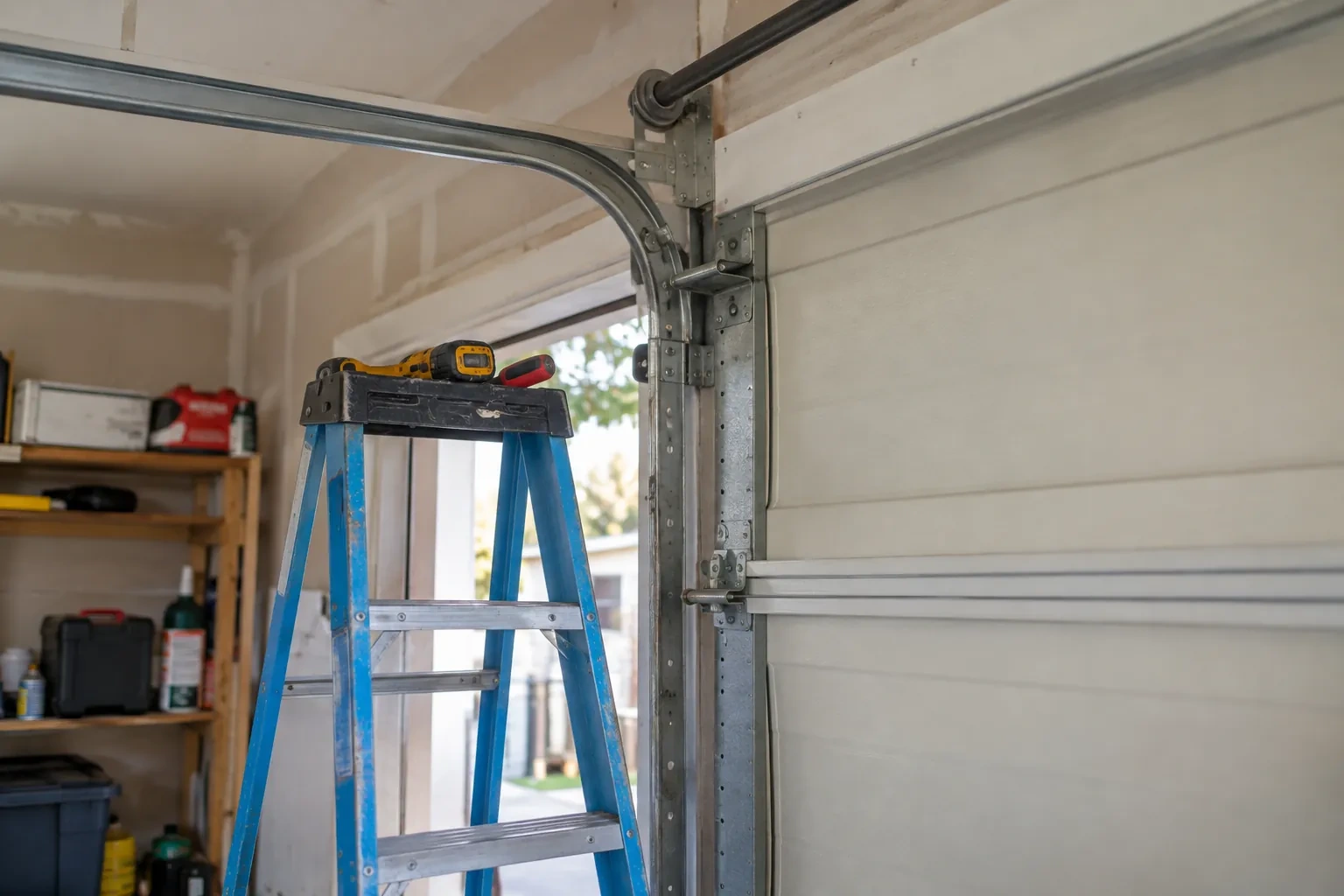
Yes, and the wood is part of the job. Screws will not hold in soft timber, so the technician cuts back to solid wood and sisters a new length of jamb alongside or replaces the lower section, fastening it through to the framing. The brackets are then lag-screwed into the fresh wood and the track set to the door. In older garages this repair is common, and it is what makes the alignment last. Garage Door Track Repair or Replacement
Do I need new cables when the springs are replaced?
Often it is sensible. Cables and springs are similar in age, and with the counterbalance already unloaded the extra work of fitting new cables is small. The technician inspects them and advises: cables with bright, tight strands and clean loops can stay and simply be re-tensioned, while cables with any fraying or rust at the bottom are better renewed now than in a separate visit later. Garage Door Cable Replacement
Openers & Access
The wall button works but none of my remotes do. What happened?
Three things account for most of these. The wall control has been put into lock mode, sometimes by a child or a visitor, which blocks all remotes until it is released. The opener's memory was cleared, usually by someone pressing the learn button while trying to program a new remote, so every remote needs programming again. Or the receiver in the head unit has failed. The first two are simple settings; the third is a part. Garage Door Opener Diagnosis and Repair
Will the safety reversal be tested as part of the repair?
Always, and after every adjustment, because changing tension, limits or force changes how the operator senses an obstruction. The door is closed onto a 38 mm block on the floor and must return to open on contact, then closed again while the low sensor beam is interrupted and must reverse the same way. If either test fails the settings are revisited until both pass, and you are shown the tests so you can repeat them monthly. Chain-Drive Opener Repair
The motor runs but the door stays still. What has happened?
Something between the motor and the door has let go. On a belt drive the usual suspects are a broken clip where the belt joins the trolley, a belt that has jumped off the sprocket or idler pulley, a trolley that failed to re-engage after the red cord was pulled, or a stripped drive gear inside the motor head, which leaves plastic shavings on the housing. Each is a specific repair. Belt-Drive Opener Repair
Why does the technician test the door by hand before anything else?
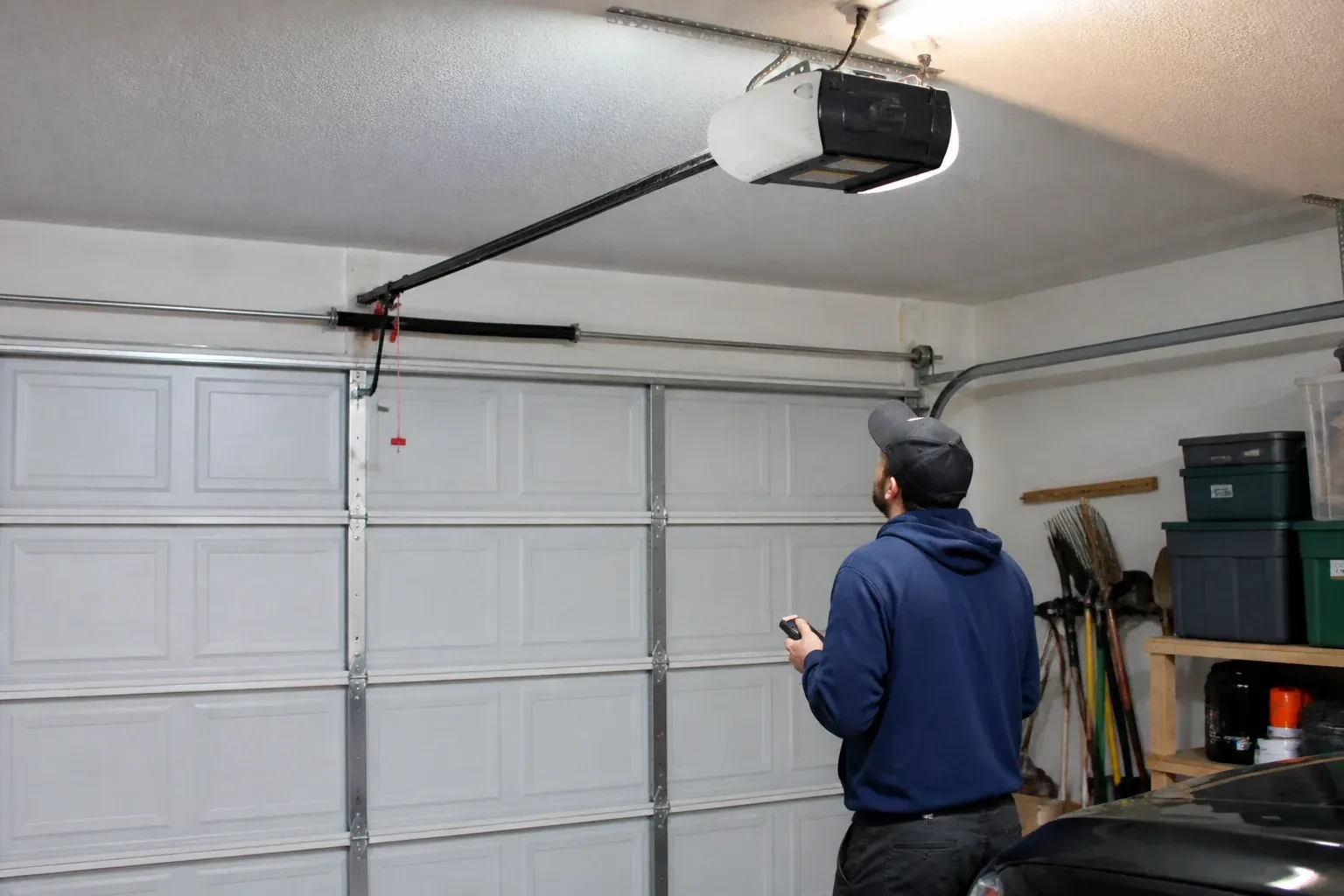
Because the opener depends on the springs. With the old unit disconnected, a balanced door lifts with moderate effort and stays put at roughly waist height. A door that drops or drifts is telling the technician the springs need adjusting, and doing that first means the new operator is never asked to haul a heavy door, which would shorten its life and mask a problem that belongs to the door. Garage Door Opener Replacement
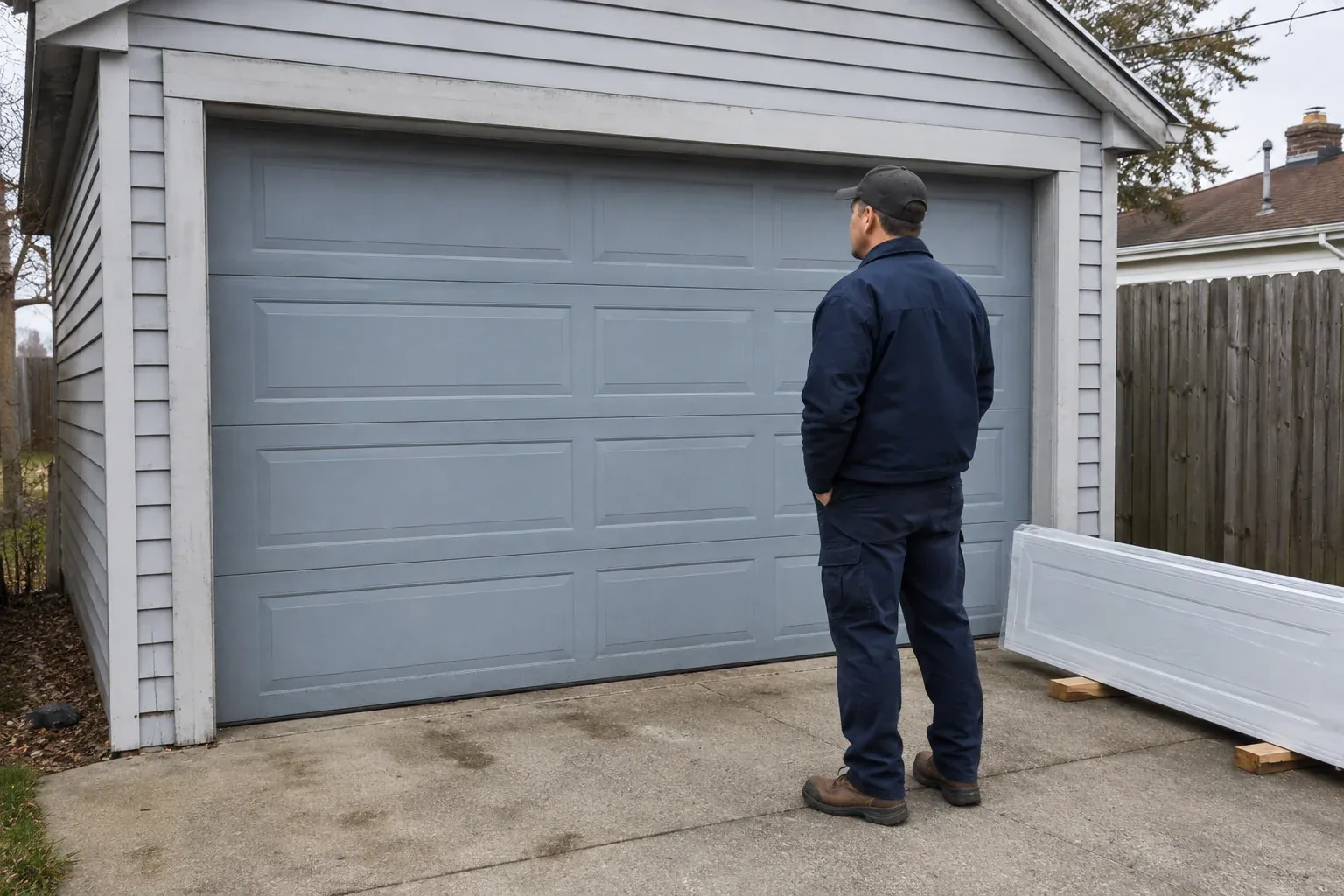
Installation & Upgrades
Which insulation details should I compare?
Look beyond a single thermal number. Compare section construction, insulation type and thickness, seals between panels, glazing and the perimeter weather seals included in the proposal. How often the door opens and how well it fits the floor also influence comfort. Product literature provides the appropriate performance information for the exact model. Sectional Garage Door Replacement
What does an R-value tell me?
An R-value describes resistance to heat flow under stated test conditions. It is useful only when you know whether the figure applies to insulation material, a section or the complete door assembly. Ask for the published basis for the exact model. Air movement at joints, windows, perimeter seals and floor gaps also affects how the garage feels in real weather. Insulated Steel Garage Door Installation
Is a building permit needed for replacement?
A like-for-like door change and a project involving structural alteration are different situations. Enlarging an opening, combining bays, replacing framing, or completing work already covered by a permit can introduce municipal review. Ask the local building department about the specific scope, and keep its direction with the door selection and installation documents. Wind-Rated Garage Door Replacement
How should I choose the panel pattern for my house?
Start with fixed proportions already on the exterior: window widths, masonry lines, roof shapes, columns and entry-door details. A simpler pattern can settle a busy elevation, while cross-buck or divided-panel designs add stronger character to a plain wall. Scale matters across wide doors, so the pattern should be viewed as a full-opening drawing or sample rather than a small swatch alone. Carriage-House Garage Door Installation
Open 24/7
Request a visit
Request a diagnosis visit
Call now · open 24/7(289) 212-6428- On-site assessment preferred
- Same fees day, night or weekend
- 17 years in business